Forgotten Disasters That Changed the Way We Live
Disasters do not always change the world immediately. Sometimes they are mourned, investigated, argued over, and then slowly absorbed into law. A locked door becomes a fire code. A poisoned medicine becomes a safety rule. A flood of industrial waste becomes an engineering requirement. A cloud of pollution becomes an environmental movement.
Many disasters fade from popular memory because they were not wars, revolutions, or famous shipwrecks. They happened in factories, schools, hospitals, towns, clubs, and ordinary streets. Yet their effects remain around us.
Every marked exit, workplace inspection, drug warning, building permit, fire door, and air-quality rule carries some memory of past failure. Modern safety often looks boring because it is designed to prevent drama. Behind that boredom are disasters people once thought could not happen, or did not bother to imagine.
The Iroquois Theatre Fire: The Exit That Would Not Open
On December 30, 1903, the Iroquois Theatre in Chicago was packed for a holiday matinee. Many in the audience were women and children. The theater had been advertised as modern and safe. In reality, it contained deadly weaknesses.
A stage fire spread quickly. The crowd tried to escape, but many exits were hidden, locked, confusing, or difficult to use. Some doors opened inward. Others had unfamiliar latches. People pressed against them in panic and could not get out.
The disaster killed more than 600 people. It remains one of the deadliest theater fires in American history.
The fire changed how public buildings were designed. Afterward, cities and theaters were forced to think more seriously about exits, signage, fire curtains, and doors that opened in the direction people would flee. Later building codes also made panic hardware common in crowded public places. The lesson was simple, but it had taken terrible loss to make it unavoidable: an exit is useless if frightened people cannot find it or open it. (Wikipedia)
The Iroquois fire changed the meaning of a door. In ordinary life, a door is just part of a room. In an emergency, it becomes the difference between survival and a crush of bodies.
The Triangle Shirtwaist Factory Fire: Locked Doors and Labor Reform
The Triangle Shirtwaist Factory fire is better known than some disasters on this list, but it is often remembered only as a tragic image: young garment workers trapped above New York City streets. Its deeper importance lies in what followed.
On March 25, 1911, fire broke out in the Triangle factory in Manhattan. Many workers were immigrant women and girls. Some escape routes were blocked or locked. The fire spread through a workplace filled with fabric, paper patterns, and crowded conditions. One hundred forty-six people died.
The disaster revealed the violence of unsafe work. It also came during a period when reformers, unions, and workers were already challenging industrial conditions. The fire did not create the labor movement by itself, but it gave reform a terrible urgency.
New York created the Factory Investigating Commission after the disaster. Cornell’s Triangle fire archive describes how the commission investigated thousands of factories and helped drive legislative reform at state and local levels. The AFL-CIO notes that New York passed laws covering fire safety, factory inspections, sanitation, and employment rules for women and children after the fire. (trianglefire.ilr.cornell.edu)
The legacy is visible in modern workplaces. Fire exits, occupancy rules, inspections, sprinkler systems, and unlocked emergency doors may seem like ordinary requirements. They are not ordinary in the historical sense. They were won against indifference.
The Triangle fire showed that a workplace could kill without a machine exploding or a wall collapsing. It could kill through neglect.
The Great Molasses Flood: The Sweet Disaster That Changed Construction
The Great Molasses Flood sounds almost comic until the details are known. On January 15, 1919, a massive storage tank in Boston’s North End burst open. More than two million gallons of molasses surged through the streets.
The wave was fast, heavy, and violent. It crushed buildings, lifted vehicles, and trapped people. Twenty-one people died and about 150 were injured.
The tank had been poorly built and badly tested. Warnings had been ignored. Residents had noticed leaks, and children reportedly collected dripping molasses from the tank. The structure stood in a crowded neighborhood, yet it had not received the kind of engineering oversight that seems obvious now.
TIME reported that the disaster helped bring changes in construction practice, including requirements for professional engineering certification and signed calculations on building plans. It helped end a looser era when large industrial structures could be built with dangerously little accountability. (Time)
The disaster changed how cities thought about industrial storage. A tank was not just a container. It was a structure. It needed design, testing, inspection, and responsibility.
The molasses flood is remembered because it sounds strange. Its legacy is serious because it helped make engineering less casual.
The Cocoanut Grove Fire: Nightlife and Fire Safety
On November 28, 1942, Boston’s Cocoanut Grove nightclub was crowded far beyond safe limits. It was wartime, and the club was packed with soldiers, couples, workers, and people looking for relief from grim news.
A fire began inside the club and spread with terrifying speed through decorations and crowded rooms. Exits were locked, blocked, concealed, or poorly designed. The main entrance used a revolving door, which quickly became jammed by the fleeing crowd.
The fire killed 492 people.
The Cocoanut Grove disaster reshaped fire safety rules for public places. It drew attention to exit access, emergency lighting, occupancy limits, interior finishes, and revolving doors. It also changed medicine. The huge number of burn victims forced hospitals to improve treatment methods and helped advance burn care.
This disaster matters because it exposed the danger of entertainment spaces. People went out for music, drinks, and dancing. They entered a building that treated crowd control as a business concern rather than a life-safety issue.
A nightclub is supposed to feel enclosed, atmospheric, and separate from the street. The Cocoanut Grove fire showed how quickly that feeling can become a trap.
The Cleveland Clinic Fire: When X-Ray Film Became Poison
Hospitals are supposed to be places of rescue. That is part of what made the Cleveland Clinic fire of 1929 so frightening. The danger came not from a kitchen, boiler, or open flame, but from stored medical film.
Nitrocellulose X-ray film was highly flammable and chemically unstable. At the Cleveland Clinic, it was stored in a basement area that had once been used as a coal bin. When the film decomposed and ignited, it released toxic gases. Explosions followed. Many victims died not from burns, but from inhaling poison.
The disaster killed 123 people. Cleveland Historical describes the fire as beginning with dangerous nitrocellulose film in a subbasement storage room, where the material decomposed and produced deadly gases. (Cleveland Historical)
The aftermath changed fire response and hospital practice. Cleveland issued gas masks to firefighters and proposed a city ambulance service. Nationally, the disaster pushed medical facilities to rethink how hazardous materials, especially nitrocellulose film, were stored. (Wikipedia)
The Cleveland Clinic fire revealed a modern kind of danger. Advanced medicine had created new materials, but institutions had not yet learned how to store them safely.
Progress brought its own hazards.
The Elixir Sulfanilamide Disaster: The Poisoned Medicine That Rebuilt Drug Law
In 1937, a company sold a liquid medicine called Elixir Sulfanilamide. Sulfanilamide itself was an important antibacterial drug. The disaster came from the solvent used to make it into a liquid: diethylene glycol, a toxic chemical.
The product was distributed without adequate safety testing. More than 100 people died, many of them children. The deaths were agonizing and preventable.
At the time, American drug law did not require manufacturers to prove a medicine was safe before selling it. That gap now seems astonishing, but it was real. The government could act against mislabeling, but its authority over safety was much weaker than it would later become.
The FDA’s own history states that the tragedy hastened the passage of the 1938 Federal Food, Drug, and Cosmetic Act, which remains a foundation of FDA regulation. The disaster helped establish the principle that drugs had to be tested for safety before marketing. (U.S. Food and Drug Administration)
This was a turning point in everyday trust. When people buy medicine, they assume someone has tested it. That assumption was built through disasters like this one.
The bottle on the shelf became safer because families had once trusted a medicine that killed.
The Donora Smog: The Town Where Clean Air Became Political
In late October 1948, a thick smog settled over Donora, Pennsylvania. The town sat in a river valley with heavy industry nearby. A temperature inversion trapped pollution close to the ground. Smoke, gases, and fog mixed into a poisonous blanket.
People coughed, gasped, and struggled to see. Doctors and emergency workers moved through near-blindness. Twenty people died, and thousands became ill in a town of about 14,000.
The Donora smog became one of the key environmental health disasters in the United States. A 2018 public health review noted that the Donora museum’s slogan, “Clean Air Started Here,” is not mere exaggeration. The episode helped launch serious public health attention to air pollution. (PMC)
Smithsonian Magazine describes Donora as the worst air pollution disaster in U.S. history and notes that it helped jumpstart environmental and public health fields. (Smithsonian Magazine)
Donora did not create the Clean Air Act by itself. No single disaster did. But it made pollution visible as a killer, not just a nuisance.
Before Donora, dirty air could be dismissed as the smell of jobs and industry. After Donora, it became harder to ignore the bodies behind that argument.
Aberfan: The Village Buried by Coal Waste
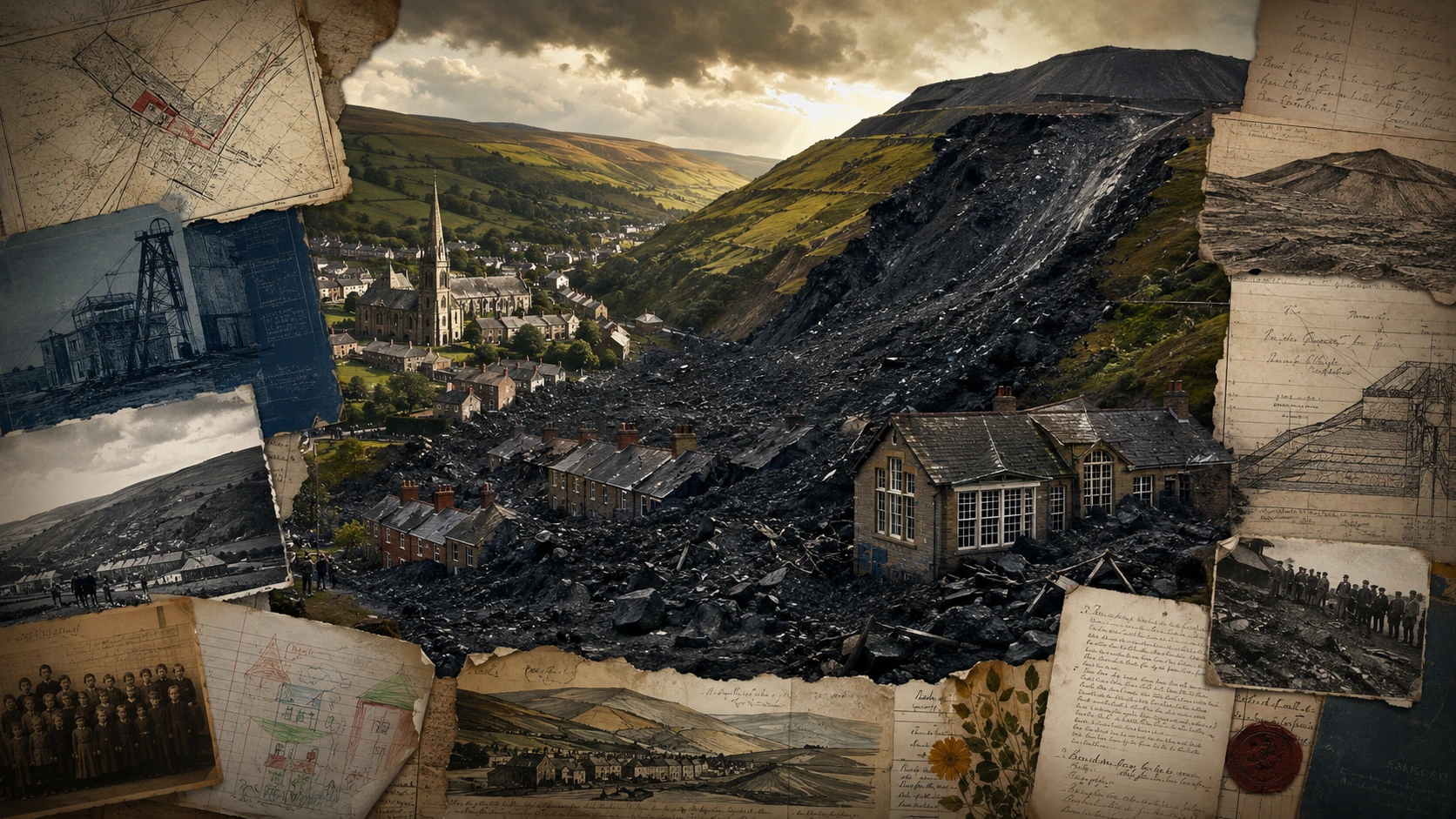
On October 21, 1966, a coal waste tip collapsed above the Welsh village of Aberfan. Heavy rain had helped destabilize the spoil heap, which sat above a natural spring. The black slurry rushed down the hillside and engulfed Pantglas Junior School and nearby houses.
The disaster killed 144 people, including 116 children.
Aberfan was not a natural disaster in any simple sense. The spoil tip had been placed where it should not have been. Warnings and local concerns had not been properly answered. The official tribunal blamed the National Coal Board and named employees for responsibility.
The disaster changed how mine waste was regulated. It helped lead to the Mines and Quarries (Tips) Act 1969, which created stronger controls over tips and spoil heaps. (Wikipedia)
Aberfan also changed British culture in quieter ways. It became a symbol of institutional neglect. It forced people to ask how industrial power treated mining communities, especially when those communities had little political influence.
The tragedy remains painful because the danger was visible before it moved. The black heaps stood above the village every day.
Our Lady of the Angels: The School Fire That Exposed Grandfather Clauses
On December 1, 1958, a fire broke out at Our Lady of the Angels School in Chicago. The building had passed inspection only weeks earlier. Yet it lacked many safety features now expected in schools.
The school had no automatic fire alarm connected directly to the fire department. There were no modern smoke detectors. Stairwells and corridors allowed smoke and flames to spread. A grandfather clause meant the older building did not have to meet newer safety standards required of new schools.
Ninety-two children and three nuns died.
The disaster shocked the United States. It led to major improvements in school design and fire safety standards. Fire Engineering notes that the school was allowed to remain compliant with older rules because of a grandfather clause, even though newer buildings had stricter requirements. (Fire Engineering)
The lesson was blunt. A building could be legal and still unsafe.
That idea changed how people thought about schools. Parents did not care whether a hallway met an old ordinance. They cared whether children could escape.
Why Forgotten Disasters Matter
Forgotten disasters matter because they explain the safety rules people rarely notice. They show why doors open outward. Why exits glow. Why factories are inspected. Why medicine must be tested. Why hazardous film disappeared from hospital storage. Why air pollution became a public health issue. Why old schools could no longer rely on old standards.
They also reveal a hard pattern. Many disasters were not surprises to everyone. Workers knew doors were locked. Residents saw tanks leaking. Communities worried about waste tips. Doctors and chemists understood some dangers before laws caught up. The victims often lived closest to risks that officials treated as acceptable.
This is why disaster history should not be read only as tragedy. It is also a history of power. Who had to live near the tank? Who worked behind locked doors? Who breathed the smoke? Who sent children into aging schools? Who trusted a drug label? Who was ignored when they warned of danger?
Modern life is safer in many ways because earlier people were not safe. Their deaths became evidence. Their grief became pressure. Their disasters became codes, rules, inspections, and institutions.
That is a grim kind of progress, but it is progress all the same.
The most important safety measures are often the least dramatic. A clear exit sign. A tested medicine. A certified engineer’s signature. A fire-resistant stairwell. A clean-air standard. A rule about where waste can be piled.
They are quiet because they are working.
Style and structure followed the uploaded article brief.