
How People Entertained Themselves Before TV and the Internet
Before screens filled evenings, entertainment was not absent. It was simply more local, physical, seasonal, and social. People gathered in streets, kitchens, taverns, courtyards, fields, churches, fairs, theaters, and marketplaces. They sang, gambled, danced, listened, watched, joked, competed, and told stories.
Leisure was shaped by time and class. A wealthy household might enjoy music, reading, hunting, cards, or private performances. A poor family had fewer free hours and fewer expensive objects. Still, even people with hard lives found ways to create pleasure.
Entertainment in the past was often woven into daily life. Work songs made labor bearable. Festivals marked the calendar. Storytelling filled dark evenings. Games passed the time in taverns and homes. Public punishments, processions, sermons, and markets could also draw crowds, even when they were not entertainment in the modern sense.
The world before television and the internet was not quieter. In many ways, it was louder. Leisure happened where people could see and hear one another.
Storytelling Around the Fire
Storytelling is one of the oldest forms of entertainment. Long before printed books were common, people shared tales by voice. Stories carried memory, warning, humor, gossip, religion, and wonder.
A story could explain a family history. It could teach children what to fear. It could describe saints, ghosts, clever animals, lost lovers, heroic ancestors, or foolish neighbors. Some stories were ancient. Others were local and changed with each telling.
In many households, evening was the natural time for stories. Work slowed. Light was limited. People gathered near a hearth, lamp, or candle. A good storyteller could turn an ordinary room into a stage.
Oral storytelling was not only for children. Adults listened too. In societies with limited literacy, spoken entertainment carried much of what later belonged to books, newspapers, radio, and film.
The storyteller had power. A pause, gesture, repeated phrase, or lowered voice could shape the whole room. A frightening tale became stronger in darkness. A comic tale became funnier when everyone knew the people being mocked.
Stories also helped communities remember themselves. They preserved names, disasters, scandals, victories, and warnings. Entertainment and history were often the same thing.
Festivals and the Calendar of Pleasure
For much of history, leisure followed the calendar. Festivals gave people permission to eat, drink, dress differently, dance, mock authority, or rest from ordinary work.
Religious festivals were especially important. They marked saints’ days, harvests, holy seasons, weddings, funerals, and local traditions. Even when the purpose was sacred, the experience could be noisy and joyful.
A feast day might include church services, processions, music, food, games, markets, and visiting relatives. In some places, people staged plays or pageants. In others, they held contests, dances, or mock ceremonies.
Festivals mattered because everyday life was hard. Seasonal celebration gave structure to the year. It broke the monotony of labor. It also reminded people where they belonged.
Authorities often worried about festivals. Crowds could become drunk, disorderly, or rebellious. People might cross social boundaries. Servants might mock masters. Young people might court too freely. Satire and disguise made the world feel temporarily upside down.
That was part of the appeal. Festivals allowed controlled disorder. They let people release pressure without completely overturning society.
Not every festival was harmless. Exclusion, violence, drunkenness, and cruelty could be part of public celebration. Still, the festival was one of the great entertainment systems of the premodern world.
Games of Chance and Skill
People have always played games. Some were simple enough to need only stones, sticks, bones, dice, or a marked board. Others required expensive equipment.
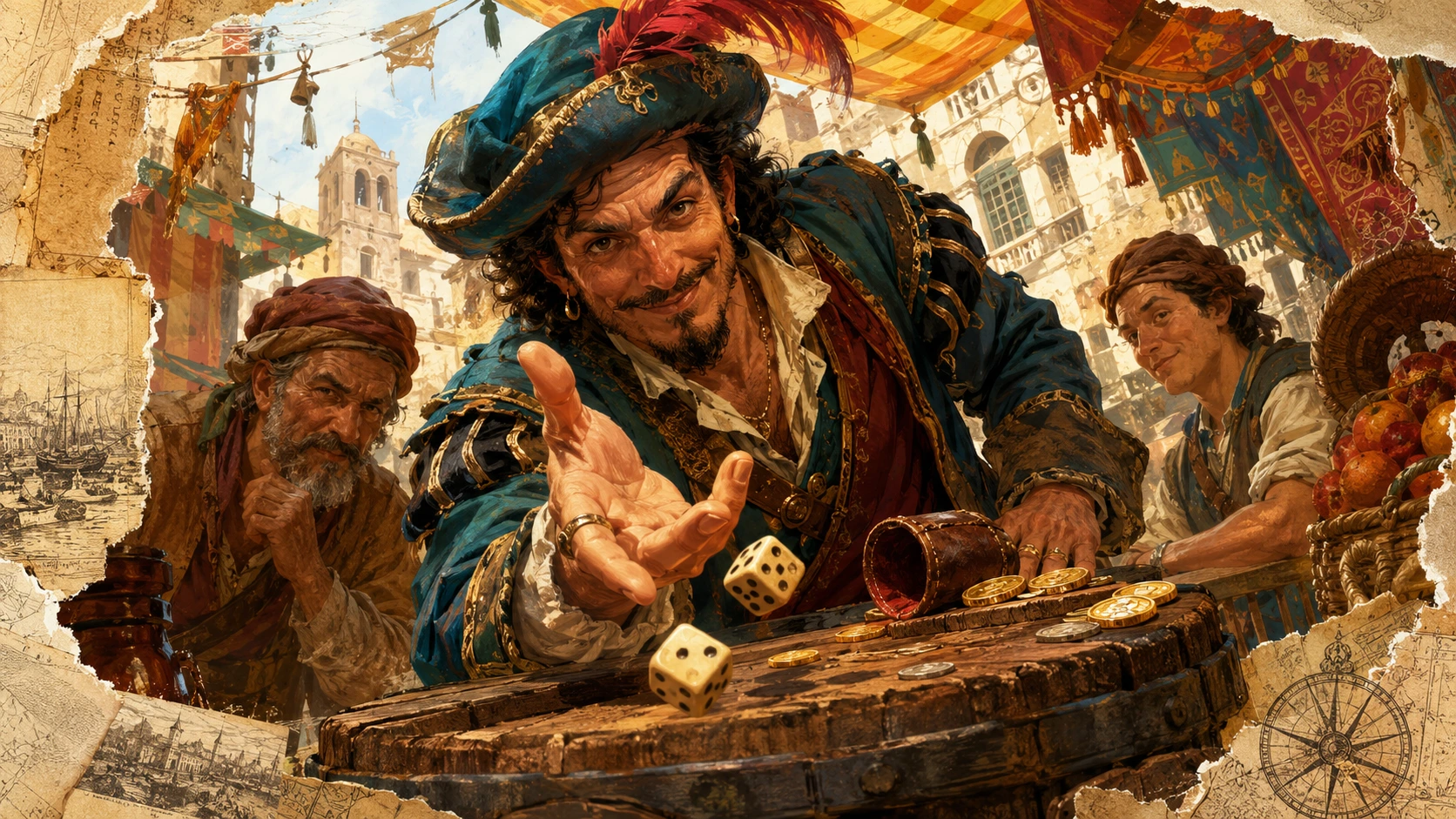
Dice games were widespread in many ancient and medieval societies. They were easy to carry and quick to play. They also brought trouble. Gambling worried religious leaders and governments because it encouraged debt, cheating, blasphemy, and disorder.
Board games also had long histories. Ancient Egyptians played senet. Romans played games with counters. Medieval and early modern Europeans played tables, an ancestor of backgammon. Chess spread across regions and became associated with strategy, nobility, and intellect.
Card games became especially popular after playing cards spread through Europe in the late Middle Ages. Cards were portable, varied, and adaptable. They could be used for gambling, skill, fortune-telling, or social play.
Games were not just ways to pass time. They trained habits of competition, patience, calculation, and risk. They also created social spaces. A game could gather friends, strangers, family members, or tavern companions around the same table.
Children played too, often with simple objects. Hoops, tops, balls, dolls, knucklebones, marbles, and chasing games required little money. Some children’s games carried echoes of adult work, war, courtship, or household life.
The objects were small, but the pleasure was serious.
Music, Singing, and Dancing
Music was everywhere before recorded sound, but it had to be made in the moment. Someone had to sing. Someone had to play. Someone had to clap, tap, hum, drum, or keep rhythm.
This made music more social than it often is today. A song was not something silently streamed through headphones. It was shared in a room, field, street, church, tavern, workshop, or courtyard.
Work songs helped coordinate labor. Sailors sang shanties to pull ropes in rhythm. Field workers sang while harvesting. Spinners, weavers, and other laborers used song to pass long hours.
Religious music also shaped entertainment, even when it was meant for worship. Hymns, chants, psalms, and festival songs could be deeply moving. They gave ordinary people a way to participate in sound larger than themselves.
Dancing was another major pleasure. Peasant dances, court dances, circle dances, wedding dances, and festival dances all served different purposes. Some were communal. Some were flirtatious. Some displayed discipline and rank.
Elites often used dance as a language of manners. At court, knowing the right steps showed education and refinement. Among ordinary people, dance could be less formal but no less meaningful.
Authorities sometimes feared dancing. They connected it with lust, disorder, vanity, or pagan survivals. That suspicion tells us how powerful dancing was. It brought bodies together in public, and that made it hard to ignore.
Public Performances and Street Entertainment
Before modern mass media, public performance was a major source of excitement. People watched jugglers, acrobats, musicians, puppet shows, animal acts, storytellers, dancers, and traveling players.
Markets and fairs were especially important. They brought together trade and spectacle. A person might go to buy cloth, tools, livestock, or spices, then stay to watch a performer.
Street entertainment did not always have a sharp line between art and hustle. A performer needed attention first. Coins came later. That meant the opening gesture mattered. Noise, costume, movement, or comedy could pull a crowd from the flow of the street.
Theater also developed in many forms. Ancient Greek drama, Roman spectacles, medieval mystery plays, Japanese Noh, Chinese opera, Sanskrit drama, commedia dell’arte, and many other traditions gave audiences shared stories in public space.
Performances could be religious, comic, political, or violent. They might teach morality. They might mock human weakness. They might celebrate rulers or quietly undermine them.
In a world without screens, seeing another human transform in front of you had enormous power. A mask, costume, song, or gesture could carry a crowd into another world.
Taverns, Alehouses, and Coffeehouses
Many people found entertainment where they drank. Taverns, alehouses, inns, and later coffeehouses were more than places of refreshment. They were social centers.
In a tavern, people could talk, sing, gamble, argue, hear news, meet travelers, or watch small performances. The atmosphere could be warm and lively, but also rough. Fights, debts, crime, and drunkenness made authorities suspicious.
Alehouses were especially important in early modern England. They gave ordinary people a place outside the household and workplace. That made them useful, but also dangerous in the eyes of moral reformers.
Coffeehouses created a different kind of leisure. In the 17th and 18th centuries, they became places for reading newspapers, discussing politics, hearing gossip, making business contacts, and debating ideas. They were sometimes called “penny universities,” because a small purchase could buy entry into conversation.
These spaces show that entertainment was often mixed with information. News itself could be entertainment. A traveler’s story, a political rumor, a scandal, or a printed sheet passed from hand to hand could hold a room’s attention.
Before the internet, people still refreshed the page. They just did it by going to a tavern, market, churchyard, or coffeehouse.
Reading, Reciting, and the Pleasure of Print
As literacy spread and books became cheaper, reading became a more common form of entertainment. But reading in the past was often shared. A person might read aloud to a family, workshop, or group of friends.
Printed ballads were especially popular. They told stories of love, murder, politics, disasters, miracles, and crime. A ballad could be sung, sold, memorized, and carried far beyond the place where it was printed.
Chapbooks offered cheap stories, jokes, prayers, romances, prophecies, and adventures. They were small, affordable, and often rough in quality. They brought reading material to people who could not buy large books.
For wealthier readers, novels, poetry, essays, travel accounts, and histories became major sources of pleasure. In the 18th and 19th centuries, serialized fiction created anticipation much like later television episodes. Readers waited for the next installment.
Reading changed private entertainment. It allowed a person to be alone with a story. Yet it also created shared culture. People discussed characters, repeated lines, argued about authors, and formed reading circles.
The printed page did not replace older entertainment. It joined it.
Sports, Contests, and Physical Games
Physical entertainment was common across history. People raced, wrestled, boxed, hunted, shot arrows, threw objects, swam, skated, rode horses, and played ball games.
Sports could be informal or highly organized. Ancient Greek athletic contests had religious and civic importance. Medieval tournaments displayed aristocratic combat skill. Village games could be rough, chaotic, and only loosely regulated.
Football-like games existed in many places. Some were violent crowd events played through streets or fields. They could involve whole communities. Broken windows, injuries, and disorder were common enough that authorities often tried to restrict them.
Archery contests, wrestling matches, horse races, and cockfights drew crowds. Some entertainments now seem cruel, especially animal baiting and blood sports. They were popular in many societies that viewed animal suffering differently than many people do today.
Sport was not only recreation. It trained bodies for war, work, hunting, and masculinity. It also allowed people to compete in front of others.
A contest gave the crowd something simple and powerful: suspense. Someone would win. Someone would lose. Everyone could argue about it afterward.
Hobbies, Crafts, and Quiet Pleasures
Not all entertainment was loud or public. Many people enjoyed quieter activities. They gardened, embroidered, carved, wrote letters, collected objects, played instruments, painted, made toys, kept birds, or cared for animals.
Women’s leisure was often shaped by expectations of usefulness. Needlework could be both necessary labor and creative pleasure. Embroidery, lace-making, quilting, and decorative sewing allowed skill, beauty, and social display.
Men also had crafts and hobbies. Some carved wood, repaired tools, kept gardens, read, hunted, played music, or collected curiosities. In wealthier circles, collecting shells, coins, plants, books, scientific instruments, or antiquities became fashionable.
Children made play from almost anything. A stick could become a horse, sword, tool, or doll. Imagination did much of the work.
Quiet entertainment mattered because not everyone wanted crowds. Then, as now, pleasure could be private. A song hummed during work, a letter read twice, a small carved object, or a garden bed could offer relief from routine.
The Household as a Stage
Homes were important entertainment spaces. Families and neighbors gathered for meals, card games, storytelling, sewing, music, riddles, and seasonal customs.
In many places, visiting was a major pastime. People called on relatives, neighbors, patrons, or friends. Conversation itself was entertainment. News, jokes, memory, complaint, and gossip filled hours.
Courtship often happened through household leisure. Singing, dancing, games, and group gatherings allowed young people to meet under supervision. Entertainment helped manage desire in socially acceptable ways.
The household could also host rituals. Births, weddings, wakes, name days, and holiday meals brought people together. Even mourning could have social forms that included food, stories, and shared memory.
Before electronic entertainment, the home was not always a private retreat. It was a stage where social life unfolded.
Why Entertainment Was So Social
The main difference between past entertainment and modern entertainment is not that people had less imagination. It is that entertainment required more presence.
A song needed singers. A game needed players. A play needed actors. A story needed a teller. A festival needed a crowd. Even reading was often aloud.
This made leisure deeply social. It also made it local. People entertained themselves with the people nearby, using the materials available.
That had advantages. Entertainment created community. It kept traditions alive. It turned streets, taverns, fields, and homes into shared spaces.
It also had limits. People had fewer choices. Social control was stronger. A person who disliked local customs could not simply retreat into endless private media. Entertainment could exclude, shame, or pressure people as well as delight them.
Still, the variety was enormous. The past had games, sports, jokes, songs, festivals, theater, gossip, crafts, reading, spectacle, and ritual. It was not empty before screens arrived.
The Old Need for Amusement
People before TV and the internet were not waiting in silence for modern life to begin. They filled their time with noise, skill, imagination, and company. Their amusements could be beautiful, crude, violent, clever, sacred, silly, or moving.
Entertainment helped them survive difficult lives. It marked seasons. It softened labor. It taught children. It gave young people ways to meet. It let communities laugh at themselves. It gave ordinary people brief escapes from hunger, work, grief, and authority.
Modern entertainment is faster and more private. It travels across the world in seconds. It offers more choice than any earlier generation could imagine.
Yet the older forms have not disappeared entirely. People still tell stories, dance at weddings, sing in groups, play cards, watch performers, attend festivals, follow sports, gossip over drinks, and make things by hand.
The tools have changed. The need has not. Long before screens, people already knew that life required more than work and sleep. It required play, wonder, laughter, music, risk, beauty, and the pleasure of gathering together.
Style and structure followed the uploaded article brief.